
How to Search for People in LaGrange
Choose the first source by the fact already known. A full name may lead to court parties, deeds, business filings, or professional licenses. A street address is better suited to the Troup County appraisal roll, GIS maps, deeds, and historical city directories. Family-history questions often need probate files, marriage records, newspapers, and the Troup County Archives instead of a current web portal.
LaGrange is the county seat, but city and county custody remain distinct. City Hall keeps municipal administration and department files. Troup County offices keep land, trial-court, appraisal, tax, probate, and election records. Georgia agencies add statewide corporate, licensing, corrections, vital-record, and voter tools. Use this starter path, then move to the custodian when an online index stops short.
Write down each spelling, date range, address, and file number as it appears. Small differences help separate two LaGrange residents who share a name.
- Check Troup qPublic when a name or address is tied to real estate.
- Choose the correct court before searching a party name. Municipal, Magistrate, State, Superior, Probate, and federal files have different routes.
- Confirm a land trail through the GSCCCA Real Estate Index or the clerk's Real Estate Division.
- For an older resident, search archive collections, newspapers, and cataloged directories.
- Request an existing record from the right custodian when no public index supplies it.
LaGrange People Search Records Crossroads
Much of the local record trail converges at the government center on Ridley Avenue. The Clerk of Superior and State Courts records deeds, mortgages, charters, and notaries while maintaining court files. Property Appraisal keeps the ownership roll, and the County Clerk routes Board of Commissioners requests. Detailed access rules, fees, and request steps belong on the LaGrange public records page; these contacts identify the right desk.
Troup Clerk of Superior and State Courts
100 Ridley Avenue, Suite 1600
LaGrange, GA 30240
706-883-1740
Troup Property Appraisal
100 Ridley Avenue, Suite 2100
LaGrange, GA 30240
706-883-1625
LaGrange City Manager and Clerk
200 Ridley Avenue
LaGrange, GA 30240
706-883-2010
Finding LaGrange Property Records
Property research uses three connected layers. Troup qPublic supplies the current appraisal starting point. County and city GIS place a parcel among roads, address ranges, aerial images, and districts. The clerk and GSCCCA then connect the parcel to deeds, mortgages, plats, and parties in the chain of title. A parcel is the assessor's database unit; a plat is a recorded map; the situs address is the physical location, which may differ from the owner's mailing address.
Do not treat a current owner hit as proof of a former occupant. Follow the parcel identifier or legal description into deeds, then compare older occupants in directories and newspapers. Tax district 16 denotes LaGrange, while 19 and 20 through 24 identify the Downtown Development Authority and named tax-allocation districts. Those codes describe tax geography, not zoning.
The official property path includes the GSCCCA real-estate search view:
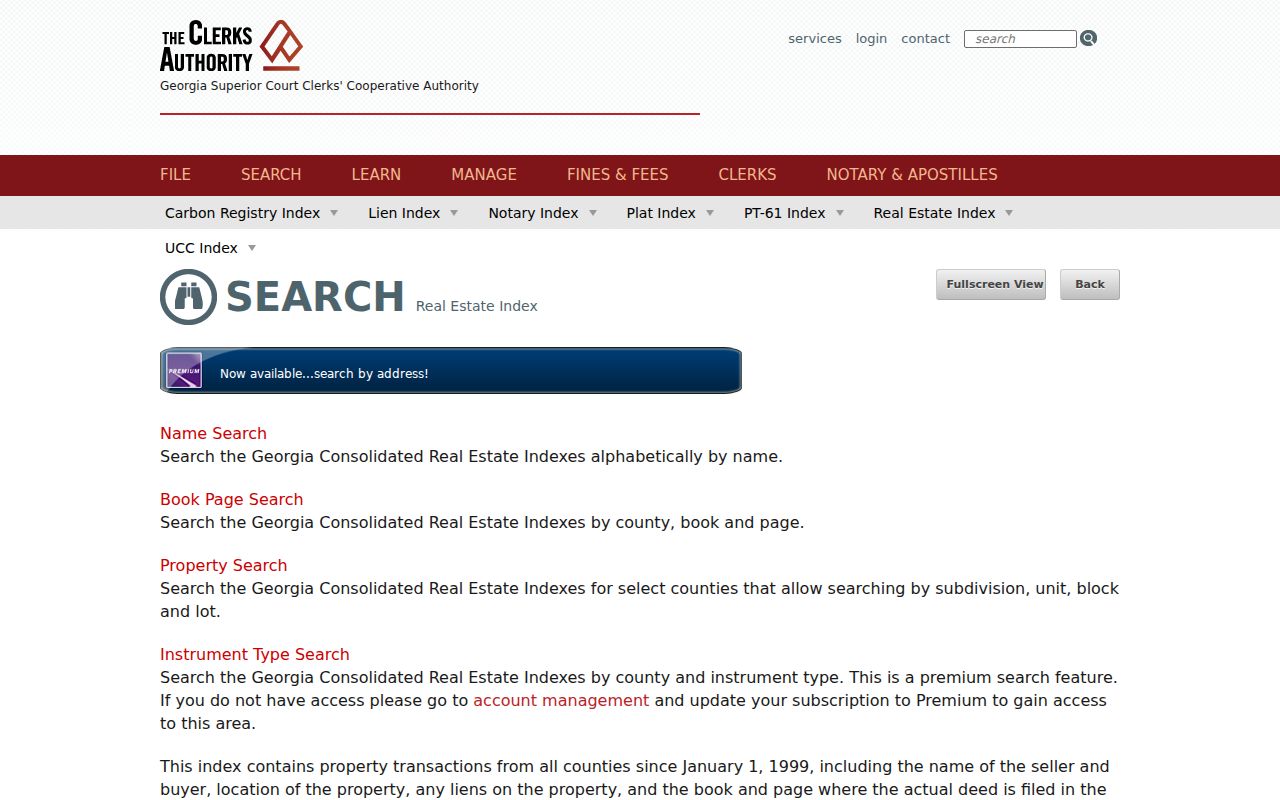
When an image or older entry is gated, call the clerk and select the Real Estate Division.
LaGrange Business and License Search
A business name can lead to people through two Georgia Secretary of State tools. The Corporations Division search accepts a business name, control number, registered-agent name, or officer name. Results may show legal name, status, type, formation date, principal office, agent, and filing history. These are corporate roles, not proof that a person still works at an address.
The professional license verification uses profession, license type, name, number, and location fields, with a wildcard for uncertain spelling. Verify live status in the official result. Locally issued LaGrange license or permit files have no verified public name-search register, so the city Business License and Permits office at 706-883-2060 is the fallback.
The official corporation screen shows the available statewide business path:
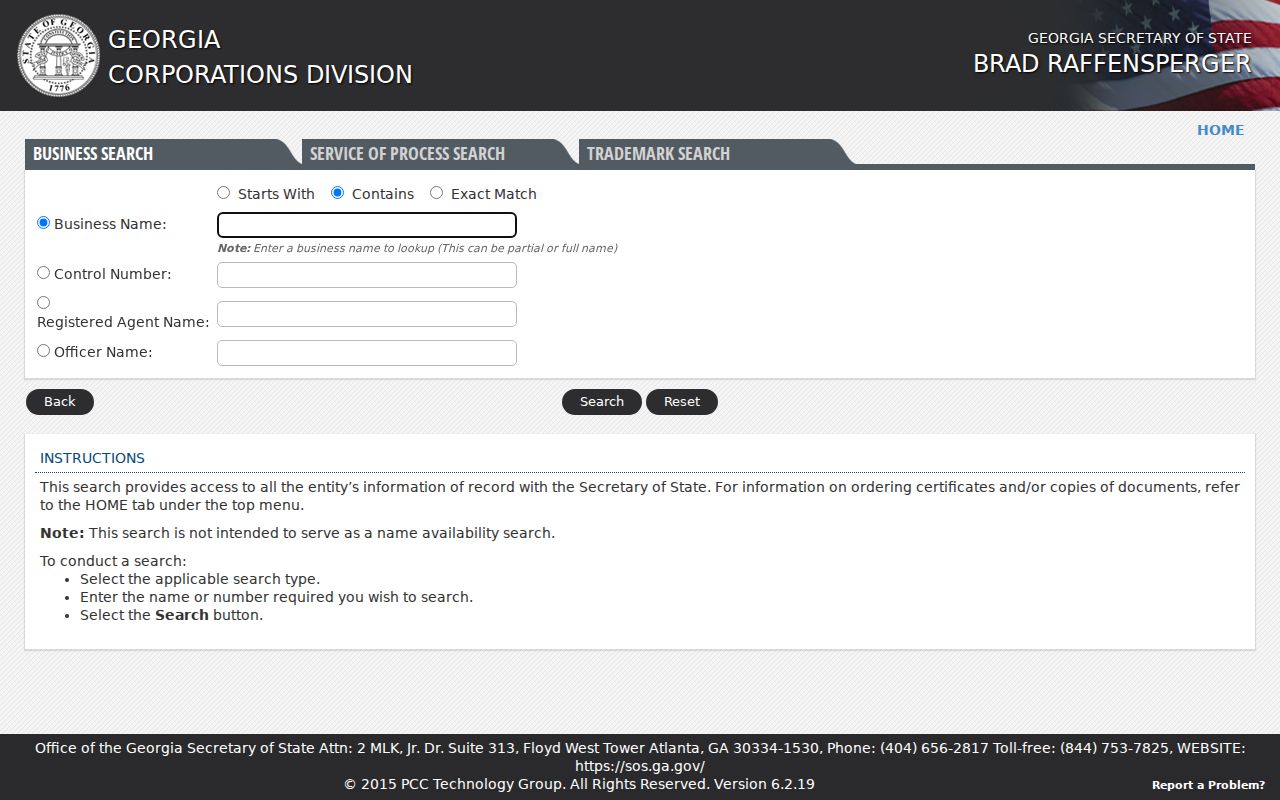
The live filing record should be checked for current status.
The separate professional verification screen organizes license fields by board and credential:
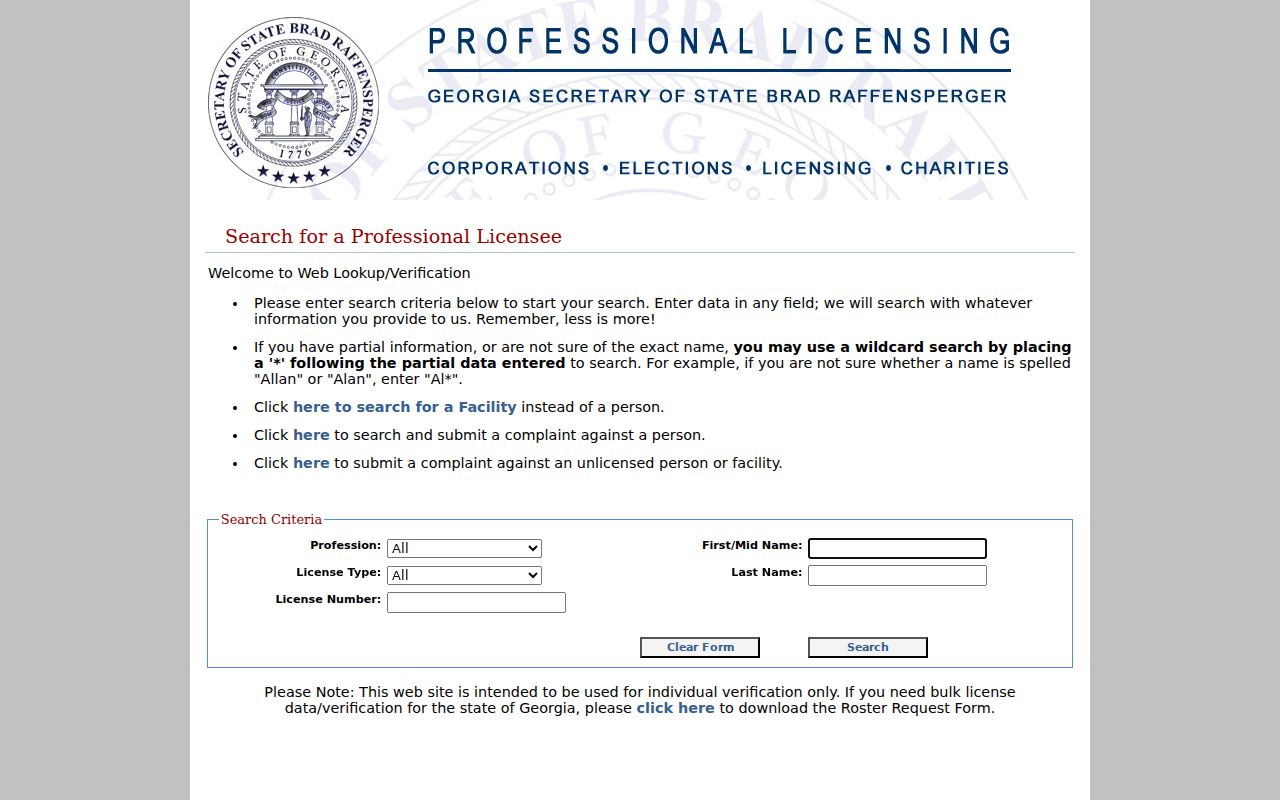
Board records remain the authority for a credential.
| Official lookup | Best input | Useful result |
|---|---|---|
| Georgia corporations | Entity, agent, officer, control number | Status, addresses, filings, principals |
| Professional verification | Name, board, type or number | Credential status and board data |
| LaGrange permits | Business, address, date range | Existing municipal file by request |
Searching LaGrange Court Records by Name
Start by identifying the court. Troup Superior and State Courts appear on the Georgia e-access page, which routes users to participating providers and says an account is required. The authenticated field list and Troup coverage dates were not publicly verified. If a name does not appear, ask the clerk by court, party name, approximate filing year, and case number if known. Online absence does not prove that no file exists.
Magistrate and Probate matters have separate counters. LaGrange Municipal Court handles city ordinance and traffic citations, and Georgia has no single statewide citation database. Juvenile, sealed, adoption, and protected parts of domestic files are not open people-search sources. A docket is the event list for a case; it is not the full file or proof that every allegation was true.
| Court | Covers | Name Search | Access |
|---|---|---|---|
| Troup Superior and State | Civil and criminal | Georgia e-access provider | Account or clerk counter |
| Magistrate and Probate | Claims, estates, wills | No unified local portal verified | Separate counters |
| LaGrange Municipal | Ordinance and traffic | Provider varies | Call 706-883-2026 |
| Federal courts | District and bankruptcy | PACER | Account and usage fees |
When LaGrange Court Search Stops
One portal cannot cover every court. The government center houses the Superior and State clerk in Suite 1600, Magistrate Court in Suite 1800, and Probate Court in Suite 2900. Juvenile Court is at 118 Ridley Avenue. For a municipal citation, call the city court. For federal cases, use PACER and select the proper district or bankruptcy court, then request transferred older files through the court and National Archives process.
- Index
- A finding aid that points to a case or document.
- Certified copy
- A copy authenticated by its custodian.
- Disposition
- The recorded outcome or status of a case.
- Record restriction
- Georgia's process limiting eligible criminal-history access; it does not seal every courthouse document.
Use records lawfully. Verify identity and outcomes with the custodian. Never use a court or registry result to stalk, threaten, or harass anyone.
LaGrange Vital Records Search Routes
Birth and death certificates for LaGrange events come through Georgia DPH or a county vital-record office, not Troup Probate Court. State coverage begins in January 1919. Certified birth copies are limited to eligible requesters with direct and tangible interest. Death access depends on the copy: the public may order a plain-paper death record with the Social Security number redacted, while a certified cause-bearing copy remains restricted.
Troup Probate Court handles local marriage licenses and copies. Divorce decrees stay with the Superior Court clerk. State verification ranges are narrower than county files, and verification is not a decree. The DPH request page covers mail and online routes, while current notices warn some processing can take eight to ten weeks. Older genealogy material must be traced collection by collection. Georgia publishes no simple rule that all births or deaths open after a fixed number of years.
Georgia DPH presents the current request channels in this official view:
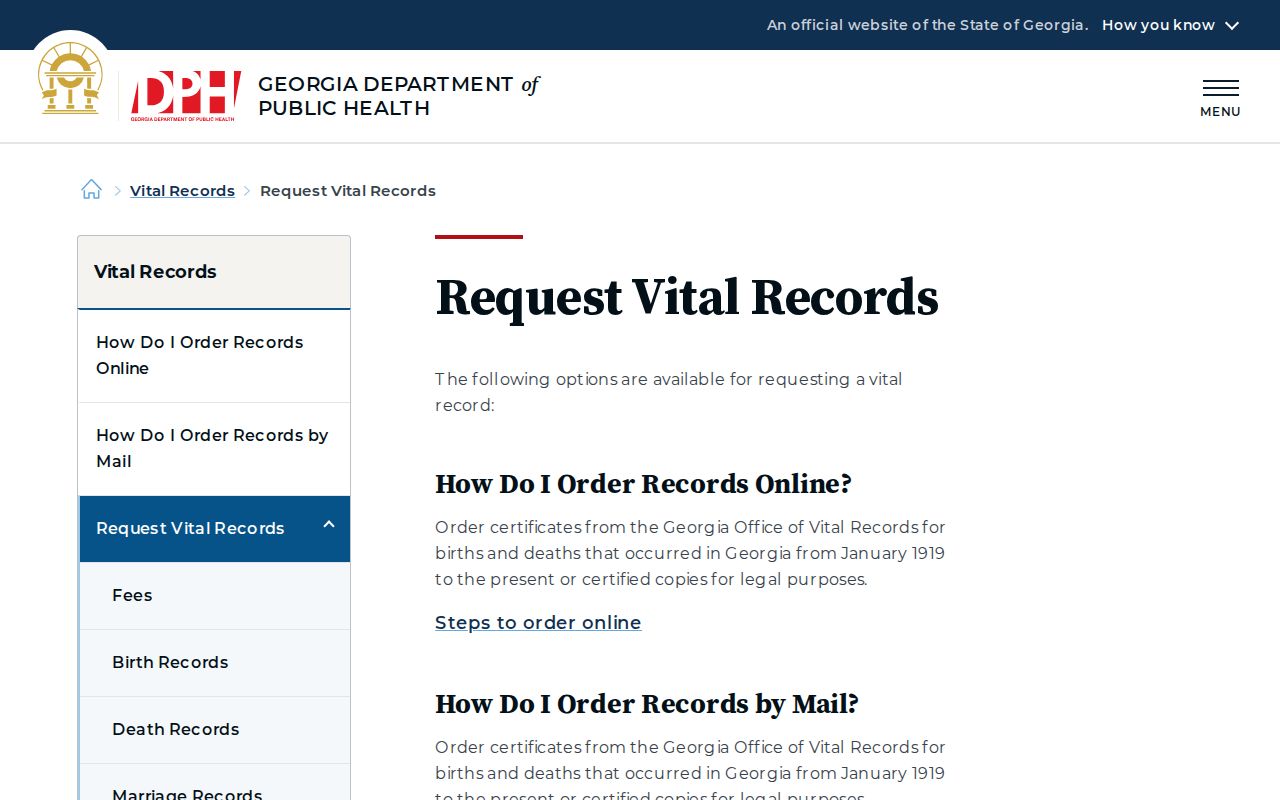
Eligibility and processing notices should be rechecked before ordering.
LaGrange Voter Registration Lookup Limits
Georgia's My Voter Page is a personal verification tool. It can return status, polling and early-vote locations, elected officials, registration information, sample ballots, and absentee or provisional status. It is not an unrestricted resident directory. The Troup registrar retains the official registration record.
Georgia also sells electronic voter lists through a separate order process. Public fields may include names, birth year, residence and mailing fields, precincts, districts, registration dates, and participation dates. They omit telephone numbers, full dates of birth, Social Security numbers, and driver-license numbers. VoteSafe protects qualifying participants' residence information. Full mechanics, prices, public fields, and protected-address rules appear in the LaGrange voter registration lookup.
Searching LaGrange Historical People Records
The Troup County Archives collections combine local-government and family-history trails often split elsewhere. Named collections include LaGrange City Council minutes, Superior Court records, Commission minutes, marriages, naturalizations, and finding aids. The Digital Library of Georgia searches records and full text, then filters by creator, subject, people, location, holding institution, and format.
Use period language. Older newspapers print the city as “La Grange,” and Georgia's former Court of Ordinary handled work now tied to probate. Community names such as Antioch, Aubrey, Crowder, Deloach, Evansville, Musick, Unity, and Vernon can uncover a person missed by a city-only search. The cataloged 1929 African American city directory and digitized 1945 phone book add address and household context that deeds cannot provide.
The Georgia court search capture shows one digital route into LaGrange people records:
For undigitized books, contact the Archives at 136 Main Street or inspect Georgia Archives microfilm cards.
LaGrange Records After the 1936 Fire
Fire destroyed the Troup County courthouse on Court Square on November 5, 1936, and its replacement rose on Ridley Avenue. That event explains why older citations may point to Court Square while modern requests go to the government center. It does not prove the county's earlier books vanished. Georgia Archives warns that courthouse disasters often left surviving records.
Treat the fire as a research fork. Check county microfilm cards book by book, search digitized Superior Court and Court of Ordinary collections, and ask Troup County Archives about originals. Modern digitization has limits too. GIS work began in 2009, its mapping office formed in 2010, and 2020 orthophotography replaced older imagery, but no verified Troup-wide deed imaging start year was found. A missing web image may still exist at the clerk's counter.
The Georgia corrections locator is another official name trail:
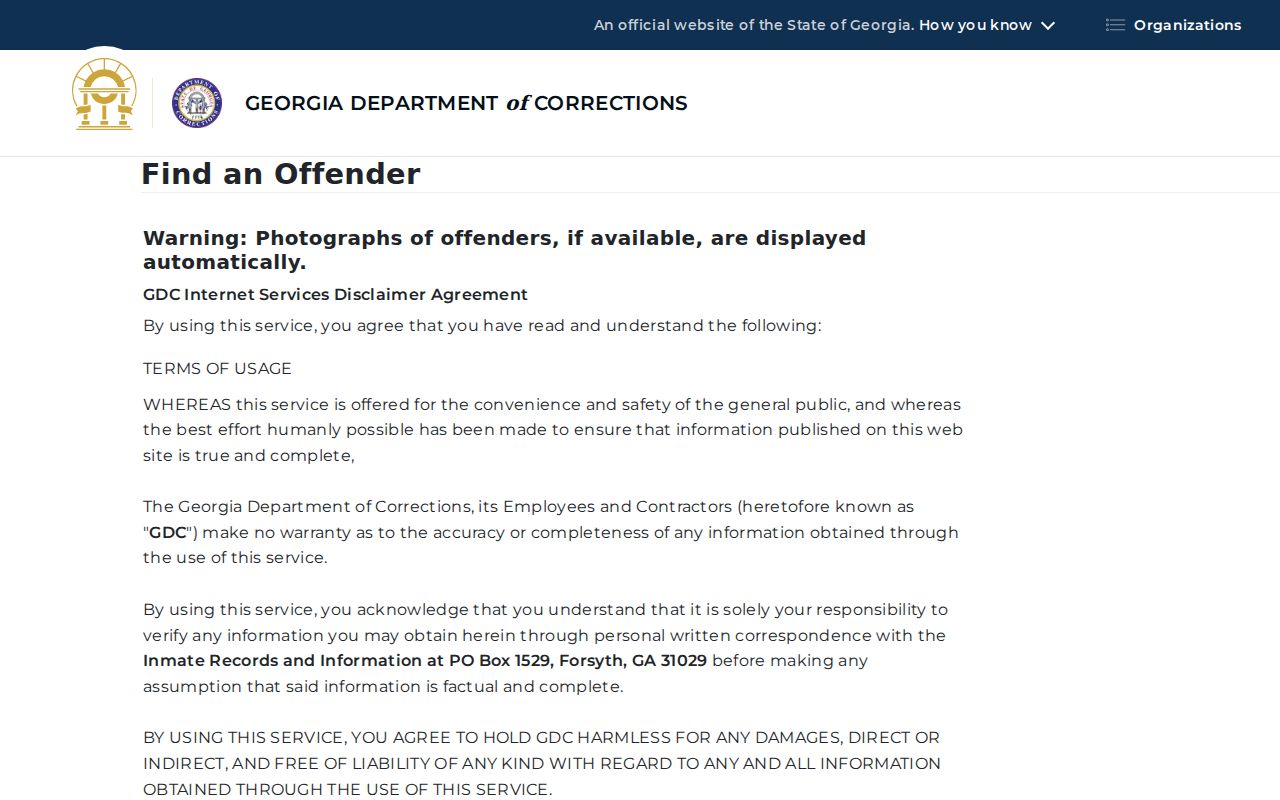
The locator must be verified with GDC because records and custody status change.
The GBI registry supplies a separate public-safety search:
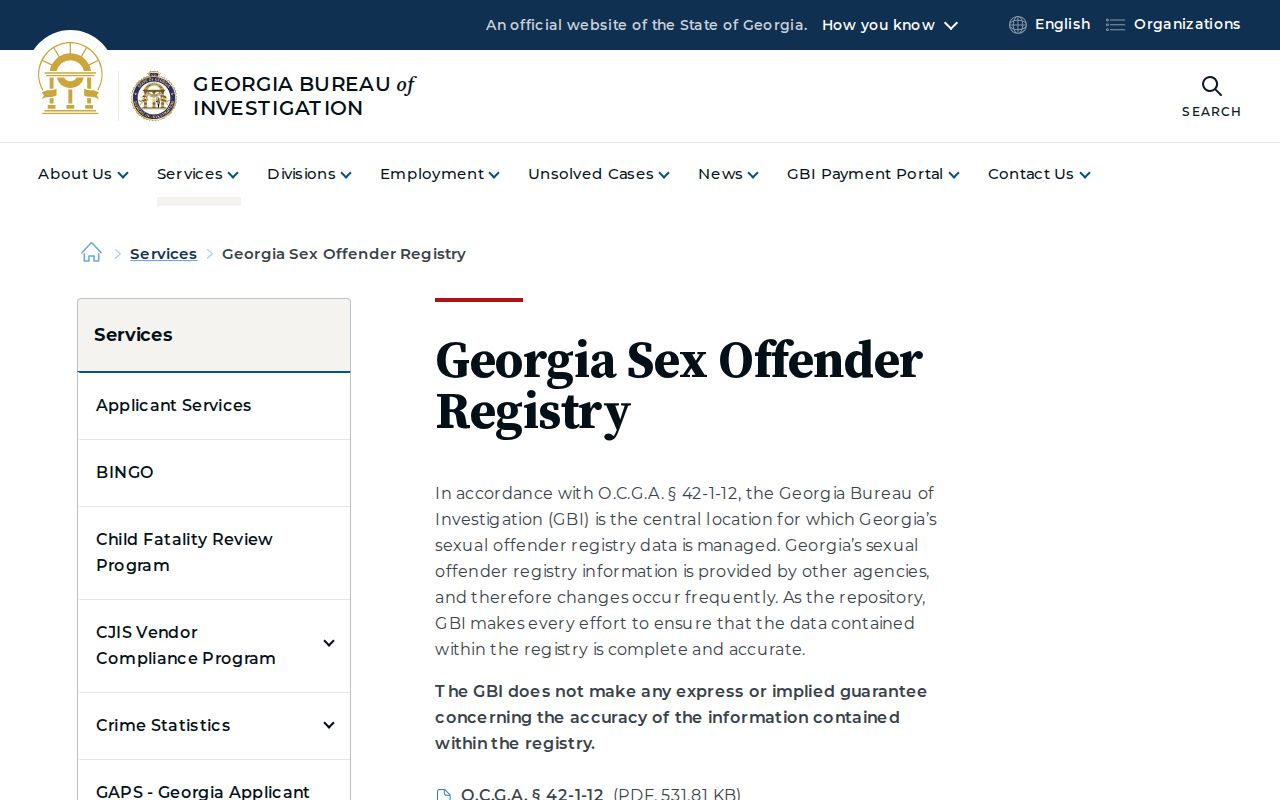
Registry information is for lawful public-safety awareness and must never be used to harass anyone.
LaGrange Custody Records Search
Local jail custody, Georgia prison custody, the public registry, and federal incarceration are separate records. No authoritative online Troup County jail roster was verified, so current local status should be checked with the jail at 706-883-1729 or the Sheriff and Jail main number at 706-883-1616. The GDC locator searches state offenders by name, description, GDC identifier, or case number. Its FAQ suggests trying the first four letters of a surname and selecting all offenders when an active-only search fails.
The federal Bureau of Prisons locator covers federal inmates from 1982 forward. Georgia VINE, launched statewide in 2024, provides custody-status notifications by phone, web, and app. These systems answer different questions, and a release label in one jurisdiction does not establish a person's status everywhere. Confirm changing custody data with the agency that supplied it.
Confirming a LaGrange People Search
Commercial people-finder results can suggest a name, age range, phone, or possible associate, but their sources and update dates may be unclear. Official indexes identify a custodian and record family. Neither should be accepted without checking the underlying record, especially when names are common or addresses changed.
| Source | Strength | Limit |
|---|---|---|
| Official index | Custodian and record reference | May omit images, older years, restricted data |
| Certified record | Authenticated copy | Eligibility and fees may apply |
| Commercial finder | Fast lead aggregation | May be stale, merged, unsupported |
| Archive | Historical context | Coverage varies by collection |
When a county administrative file is not online, use the Troup JustFOIA portal. Georgia's Open Records Act calls for an initial response within three business days, not necessarily final production. Describe an existing record narrowly, give a date range, and request electronic delivery where practical. The first 15 minutes of eligible county labor are free; further charges and the production timeline should appear in the response.
Tracing LaGrange Heirs Through Records
An heir search needs a chain of records, not a single name hit. Begin with the Troup Probate Court when an estate may have been filed. Its material can identify a decedent, the personal representative, filing dates, and public documents in the estate. A decedent is the person who died. Adoption, guardianship, and other protected details may be sealed or restricted, so ask the probate counter which portions can be inspected and what a copy or certification will cost.
Next, use the deed index to find land held by the decedent and later transfers involving an estate or named parties. Search both grantor and grantee roles, since an executor may appear in one role while an heir appears in another. Match book and page references against the recorded instrument. Then compare obituaries, marriage notices, cemetery material, and community news in the Troup County Archives collections. Those sources can supply relationships and name changes that the land index does not explain.
Older LaGrange families may require several spellings and place terms. Search “La Grange” as well as “LaGrange,” and try the community names used in county records. A death certificate can confirm facts for an eligible requester, but recent vital records have access limits. Treat each match as one link in the chain, and confirm it with the office file before drawing a family conclusion.
Note: Probate, deeds, and obituaries complement one another, but none alone proves every heir or present address.